Buy jomsborg.eu ?
We are moving the project
jomsborg.eu .
Are you interested in purchasing the domain
jomsborg.eu ?
domain@kv-gmbh.de · 0541-91531010
Buy jomsborg.eu ?
Why did Germanic troops like to raid Roman territories?
Germanic troops liked to raid Roman territories for several reasons. Firstly, the Roman Empire was wealthy and had abundant resources, making it an attractive target for plunder. Additionally, the Roman territories were often poorly defended, making them vulnerable to raids. Furthermore, raiding Roman territories allowed the Germanic tribes to acquire valuable goods, livestock, and slaves, which could help to improve their own economic and social standing. Finally, raiding Roman territories also allowed the Germanic tribes to assert their power and influence in the region, as well as to weaken their Roman rivals. **
Holy Roman Emperor
The title of Holy Roman Emperor was a title given to the ruler of the Holy Roman Empire, a political entity in Central Europe that existed from 962 to 1806. The Holy Roman Emperor was considered the secular ruler of the Christian world, with authority over a vast territory that included parts of modern-day Germany, Italy, and France. The position was elected by a group of powerful princes and bishops known as the Electoral College. The title of Holy Roman Emperor was eventually abolished in 1806 following the defeat of the Empire by Napoleon Bonaparte. **


Similar search terms for Roman
Top-Angebote
Products related to Roman:
-
Bronzhaus Greek Or Roman Warrior By Botero Bronze Sculpture Marble Base Statue Figurine DecorCondition: Item is in perfect Condition Bronze Dimensions with Marble Base: Height 19 inches X Width 9 inches Marble Dimensions:6.5 inches X 6 inches Height without base:18 inches Weight:20 LBS Inventory:61DS4978116 Original or Reproduction:...568,49 $*Shipping: 0,00 $Secure redirect to the provider
-
Bronzhaus Viking Warrior By Kamiko Bronze Sculpture Japanese Artist Figurine Home DecorCondition: This sculpture is in a perfect condition Bronze Dimensions with Marble Base: Height 10 inches X Width 7 inches Marble Dimensions:7 inches X 4 inches Height without base:9 inches Weight:8 LBS Inventory:43YRD7664034 Original or Reproduction:…246,99 $*Shipping: 0,00 $Secure redirect to the provider
-
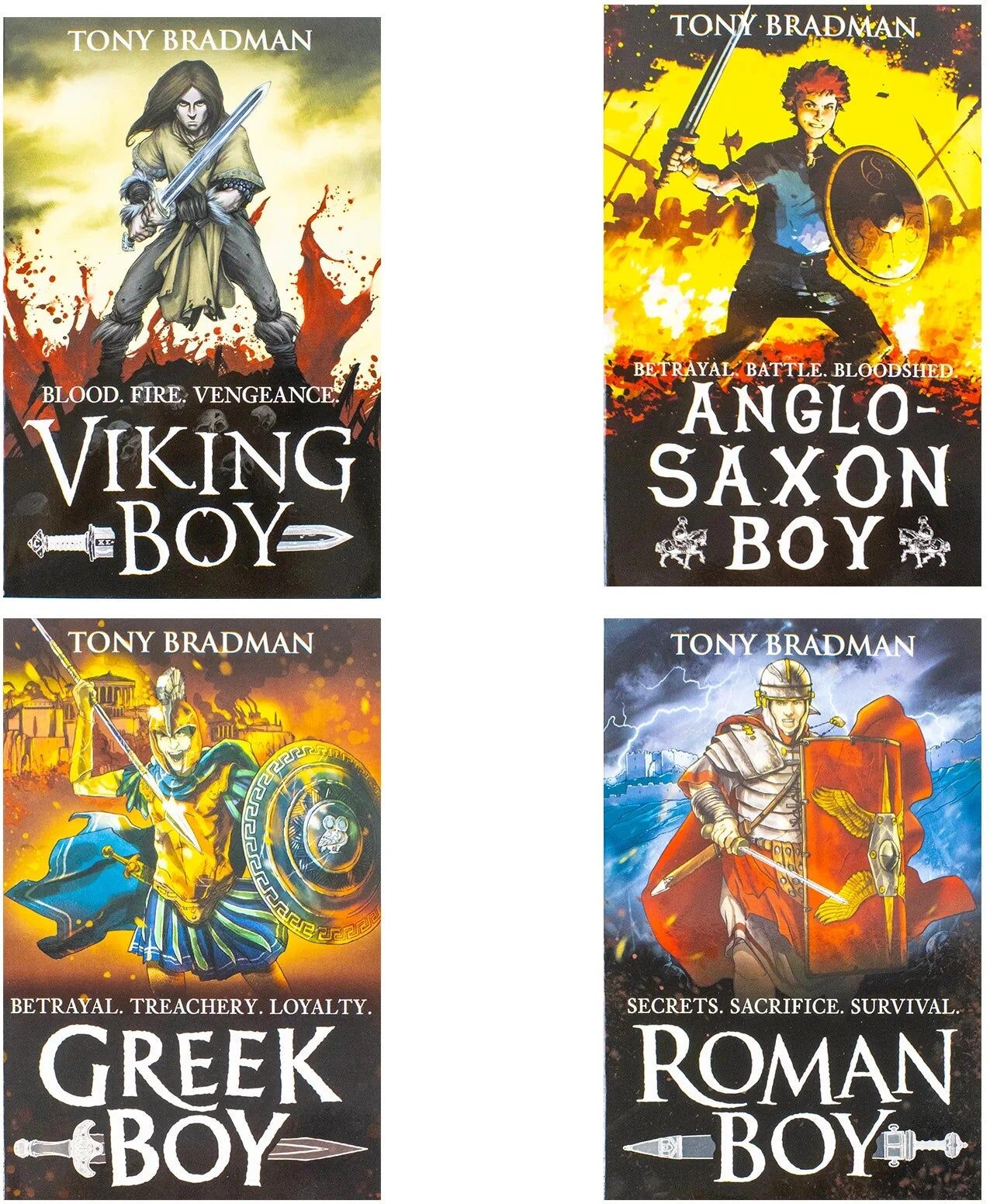
Walker Books Tony Bradman Historical Adventures Collection 4 Books Set (Viking Boy, Greek Boy, Anglo-Saxon Boy & Roman Boy)Viking Boy An action-packed blend of historical adventure and fantasy for junior readers; a blast of uncensored Viking adventure. Gunnar is the son of a Viking chieftain, living peacefully on his family steading with his mother, father and their people – until they are raided by Skuli and his Wolf Men, who raze his home to the ground and take his father's life. Gunnar swears an oath to avenge his father's death and save his mother from Skuli – but first he must run to save himself. Murderous raiders, hand to hand battles to the death, mythical flying wolves and a relentless sea journey to the Land of Fire and Ice... Unknown to Gunnar, his life has been foretold, and he finds he has a destiny greater than his own story. Greek Boy For fans of Percy Jackson and Dominic Sandbrook - Key Stage 2 history topics brought to life as pacey action thrillers. Nikos is the son of an important Athenian politician as the shadow of war against the Persians descends over Ancient Greece. When his father is forced to flee Athens, leaving his family behind, Nikos hears shocking news; his father is accused of spying for the Persian king. As Persia invades Greece, Nikos and his family are cast out as traitors. Determined to clear his father's name, Nikos goes undercover as a Greek spy in the Persian army. His quest for the truth - personal and political - takes Nikos from the burning of Athens to the famous battles of Salamis and Platea. Anglo-Saxon Boy The story of one Anglo-Saxon boy's journey to the Battle of Hastings in 1066: Key Stage 2 History brought to life as battle-packed adventure. 1065: Magnus is the son of Harold Godwinson, lord of the Southern Saxons and ruthlessly ambitious claimant to the throne of England. Overnight, Magnus finds himself cast centre-stage in the blood-soaked family feud that led to one of history’s most famous battles. This is the family tragedy behind 1066: live it with Magnus, as the wolves of history close in on his Anglo-Saxon boyhood. Roman Boy Banished from Rome by his jealous stepfather, fourteen-year-old Lucius is exiled to Londinium. Plunged into mortal danger as he flees his stepfather's assassin, Lucius takes a false name and joins the brutal ranks of The Eagles, the Roman Legion in Britannia. Under the watchful eye of the god Jupiter, Lucius excels in battle and catches the attention of his superiors – but how can he fulfil his destiny when he can’t even claim his own name? As the shadows of war gather, Lucius’s secret past catches up with him. He must face not only the Celtic rebels but also his stepfather’s relentless vendetta – and the spectre of his own self-doubt.14,99 £*Shipping: 2,99 £Secure redirect to the provider



-
'Roman-German Emperors'
The Roman-German Emperors were a series of Holy Roman Emperors who ruled over the Holy Roman Empire from the Middle Ages to the early modern period. They were considered the successors to the ancient Roman Emperors and sought to establish their authority over the territories of the former Western Roman Empire. The title of Roman-German Emperor was meant to signify their dual role as rulers of both the Roman and Germanic peoples. The most famous Roman-German Emperor was Charlemagne, who was crowned Emperor of the Romans by Pope Leo III in 800 AD. The title continued to be used by subsequent Holy Roman Emperors until the dissolution of the Holy Roman Empire in 1806. **
-
"Roman-German Emperors"
The term "Roman-German Emperors" refers to the Holy Roman Emperors, who were rulers of a political entity in Central Europe that existed from 962 to 1806. The title of Holy Roman Emperor was created in the 10th century by Otto I, King of Germany, and it symbolized the revival of the Roman Empire in the West. The Holy Roman Emperors were considered the successors of the ancient Roman Emperors and were elected by a group of German princes. The empire was a complex political entity that encompassed parts of modern-day Germany, Italy, and other European territories. **
-
Roman-German Emperors
The term "Roman-German Emperors" refers to the Holy Roman Emperors, who were rulers of the Holy Roman Empire from the Middle Ages until its dissolution in 1806. The title of Holy Roman Emperor was created in the 10th century and was held by various monarchs who claimed to be the successors of the ancient Roman emperors. The Holy Roman Emperors were elected by a group of German princes and were considered the highest secular authority in the Holy Roman Empire, which was a complex political entity that encompassed parts of modern-day Germany, Italy, and other European countries. **
-
Roman-German emperors
The term "Roman-German emperors" refers to the Holy Roman Emperors, who were rulers of the Holy Roman Empire from the Middle Ages to the early 19th century. These emperors were considered the successors to the rulers of the ancient Roman Empire and were elected by a group of German princes. The Holy Roman Emperors held significant political and religious power in Central Europe, although their authority was often challenged by regional rulers and the papacy. The title of Holy Roman Emperor was officially abolished in 1806 following the dissolution of the Holy Roman Empire. **

Holy Roman Emperors
The Holy Roman Emperors were rulers of the Holy Roman Empire, a complex political entity in central Europe that existed from 800 to 1806. They were elected by a group of powerful princes and bishops known as the Electoral College. The title of Holy Roman Emperor was considered to be the highest temporal authority in Europe, although the actual power of the emperors varied greatly throughout the history of the empire. Some of the most famous Holy Roman Emperors include Charlemagne, Otto the Great, and Charles V. **
Was the Holy Roman Empire truly a Holy Roman Empire?
The term "Holy Roman Empire" was used to describe the multi-ethnic complex of territories in Central Europe ruled by the Roman Catholic Church and the Germanic Holy Roman Emperor. However, the empire was not truly holy in the sense of being divinely ordained, as its power was often based on political and military strength rather than religious authority. Additionally, the empire was not truly Roman, as it did not have its origins in the ancient Roman Empire but rather in the medieval Kingdom of Germany. Overall, the Holy Roman Empire was a complex political entity that combined elements of religion, politics, and culture, but it did not fully embody the ideals of holiness or Roman heritage. **
Top-Angebote
Products related to Roman:
-
Bronzhaus Signed Gregoire Roman Emperor Warrior Bronze Sculpture Figurine Statue FigureCondition: This sculpture is perfect condition. Bronze Dimensions with Marble Base:Height 12 inches x Width 8 inches Marble Dimensions: 8 inches X 6 inches.334,99 $*Shipping: 0,00 $Secure redirect to the provider
-
Bronzhaus Bronze Marble Sculpture Roman God Warrior Statue Signed Picault Figure FigurineCondition: This sculpture is in perfect condition Bronze Dimensions with Marble Base: Height 16 inches X Width 8 inches Marble Dimensions:8 inches X 7 inches Height without base:15 inches Weight:17 LBS Inventory:74B0937647 Original or Reproduction:…439,99 $*Shipping: 0,00 $Secure redirect to the provider
-
Bronzhaus Greek Or Roman Warrior By Botero Bronze Sculpture Marble Base Statue Figurine DecorCondition: Item is in perfect Condition Bronze Dimensions with Marble Base: Height 19 inches X Width 9 inches Marble Dimensions:6.5 inches X 6 inches Height without base:18 inches Weight:20 LBS Inventory:61DS4978116 Original or Reproduction:...568,49 $*Shipping: 0,00 $Secure redirect to the provider
-
Bronzhaus Viking Warrior By Kamiko Bronze Sculpture Japanese Artist Figurine Home DecorCondition: This sculpture is in a perfect condition Bronze Dimensions with Marble Base: Height 10 inches X Width 7 inches Marble Dimensions:7 inches X 4 inches Height without base:9 inches Weight:8 LBS Inventory:43YRD7664034 Original or Reproduction:…246,99 $*Shipping: 0,00 $Secure redirect to the provider
-
Why did Germanic troops like to raid Roman territories?
Germanic troops liked to raid Roman territories for several reasons. Firstly, the Roman Empire was wealthy and had abundant resources, making it an attractive target for plunder. Additionally, the Roman territories were often poorly defended, making them vulnerable to raids. Furthermore, raiding Roman territories allowed the Germanic tribes to acquire valuable goods, livestock, and slaves, which could help to improve their own economic and social standing. Finally, raiding Roman territories also allowed the Germanic tribes to assert their power and influence in the region, as well as to weaken their Roman rivals. **
-
Holy Roman Emperor
The title of Holy Roman Emperor was a title given to the ruler of the Holy Roman Empire, a political entity in Central Europe that existed from 962 to 1806. The Holy Roman Emperor was considered the secular ruler of the Christian world, with authority over a vast territory that included parts of modern-day Germany, Italy, and France. The position was elected by a group of powerful princes and bishops known as the Electoral College. The title of Holy Roman Emperor was eventually abolished in 1806 following the defeat of the Empire by Napoleon Bonaparte. **
-
'Roman-German Emperors'
The Roman-German Emperors were a series of Holy Roman Emperors who ruled over the Holy Roman Empire from the Middle Ages to the early modern period. They were considered the successors to the ancient Roman Emperors and sought to establish their authority over the territories of the former Western Roman Empire. The title of Roman-German Emperor was meant to signify their dual role as rulers of both the Roman and Germanic peoples. The most famous Roman-German Emperor was Charlemagne, who was crowned Emperor of the Romans by Pope Leo III in 800 AD. The title continued to be used by subsequent Holy Roman Emperors until the dissolution of the Holy Roman Empire in 1806. **
-
"Roman-German Emperors"
The term "Roman-German Emperors" refers to the Holy Roman Emperors, who were rulers of a political entity in Central Europe that existed from 962 to 1806. The title of Holy Roman Emperor was created in the 10th century by Otto I, King of Germany, and it symbolized the revival of the Roman Empire in the West. The Holy Roman Emperors were considered the successors of the ancient Roman Emperors and were elected by a group of German princes. The empire was a complex political entity that encompassed parts of modern-day Germany, Italy, and other European territories. **
Similar search terms for Roman
-
Walker Books Tony Bradman Historical Adventures Collection 4 Books Set (Viking Boy, Greek Boy, Anglo-Saxon Boy & Roman Boy)Viking Boy An action-packed blend of historical adventure and fantasy for junior readers; a blast of uncensored Viking adventure. Gunnar is the son of a Viking chieftain, living peacefully on his family steading with his mother, father and their people – until they are raided by Skuli and his Wolf Men, who raze his home to the ground and take his father's life. Gunnar swears an oath to avenge his father's death and save his mother from Skuli – but first he must run to save himself. Murderous raiders, hand to hand battles to the death, mythical flying wolves and a relentless sea journey to the Land of Fire and Ice... Unknown to Gunnar, his life has been foretold, and he finds he has a destiny greater than his own story. Greek Boy For fans of Percy Jackson and Dominic Sandbrook - Key Stage 2 history topics brought to life as pacey action thrillers. Nikos is the son of an important Athenian politician as the shadow of war against the Persians descends over Ancient Greece. When his father is forced to flee Athens, leaving his family behind, Nikos hears shocking news; his father is accused of spying for the Persian king. As Persia invades Greece, Nikos and his family are cast out as traitors. Determined to clear his father's name, Nikos goes undercover as a Greek spy in the Persian army. His quest for the truth - personal and political - takes Nikos from the burning of Athens to the famous battles of Salamis and Platea. Anglo-Saxon Boy The story of one Anglo-Saxon boy's journey to the Battle of Hastings in 1066: Key Stage 2 History brought to life as battle-packed adventure. 1065: Magnus is the son of Harold Godwinson, lord of the Southern Saxons and ruthlessly ambitious claimant to the throne of England. Overnight, Magnus finds himself cast centre-stage in the blood-soaked family feud that led to one of history’s most famous battles. This is the family tragedy behind 1066: live it with Magnus, as the wolves of history close in on his Anglo-Saxon boyhood. Roman Boy Banished from Rome by his jealous stepfather, fourteen-year-old Lucius is exiled to Londinium. Plunged into mortal danger as he flees his stepfather's assassin, Lucius takes a false name and joins the brutal ranks of The Eagles, the Roman Legion in Britannia. Under the watchful eye of the god Jupiter, Lucius excels in battle and catches the attention of his superiors – but how can he fulfil his destiny when he can’t even claim his own name? As the shadows of war gather, Lucius’s secret past catches up with him. He must face not only the Celtic rebels but also his stepfather’s relentless vendetta – and the spectre of his own self-doubt.14,99 £*Shipping: 2,99 £Secure redirect to the provider
-
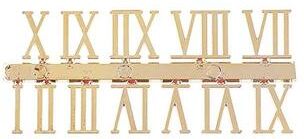
Uplift Treasures Roman Numeral Clock Repair Parts Set gold Roman NumeralsProduct Description Restore or customize your clock with this Roman numeral clock repair parts set. Designed for DIY projects and clock repairs, it includes classic numeral accessories compatible with quartz clock mechanisms. Ideal for refurbishing...23,97 $*Shipping: 0,00 $Secure redirect to the provider
-
Bronzhaus Bronze European Warrior With Sword Sculpture Rare Marble Base Figurine Home DecoCondition: This sculpture is in perfect condition Bronze Dimensions with Marble Base: Height 9 inches X Width 7 inches Marble Dimensions:7 inches X 4 inches Height without base:8 inches Weight:10 LBS Inventory:74Y7643847 Original or Reproduction:…249,99 $*Shipping: 0,00 $Secure redirect to the provider
-
Roman-German Emperors
The term "Roman-German Emperors" refers to the Holy Roman Emperors, who were rulers of the Holy Roman Empire from the Middle Ages until its dissolution in 1806. The title of Holy Roman Emperor was created in the 10th century and was held by various monarchs who claimed to be the successors of the ancient Roman emperors. The Holy Roman Emperors were elected by a group of German princes and were considered the highest secular authority in the Holy Roman Empire, which was a complex political entity that encompassed parts of modern-day Germany, Italy, and other European countries. **
-
Roman-German emperors
The term "Roman-German emperors" refers to the Holy Roman Emperors, who were rulers of the Holy Roman Empire from the Middle Ages to the early 19th century. These emperors were considered the successors to the rulers of the ancient Roman Empire and were elected by a group of German princes. The Holy Roman Emperors held significant political and religious power in Central Europe, although their authority was often challenged by regional rulers and the papacy. The title of Holy Roman Emperor was officially abolished in 1806 following the dissolution of the Holy Roman Empire. **
-
Holy Roman Emperors
The Holy Roman Emperors were rulers of the Holy Roman Empire, a complex political entity in central Europe that existed from 800 to 1806. They were elected by a group of powerful princes and bishops known as the Electoral College. The title of Holy Roman Emperor was considered to be the highest temporal authority in Europe, although the actual power of the emperors varied greatly throughout the history of the empire. Some of the most famous Holy Roman Emperors include Charlemagne, Otto the Great, and Charles V. **
-
Was the Holy Roman Empire truly a Holy Roman Empire?
The term "Holy Roman Empire" was used to describe the multi-ethnic complex of territories in Central Europe ruled by the Roman Catholic Church and the Germanic Holy Roman Emperor. However, the empire was not truly holy in the sense of being divinely ordained, as its power was often based on political and military strength rather than religious authority. Additionally, the empire was not truly Roman, as it did not have its origins in the ancient Roman Empire but rather in the medieval Kingdom of Germany. Overall, the Holy Roman Empire was a complex political entity that combined elements of religion, politics, and culture, but it did not fully embody the ideals of holiness or Roman heritage. **
* All prices are inclusive of VAT and, if applicable, plus shipping costs. The offer information is based on the details provided by the respective shop and is updated through automated processes. Real-time updates do not occur, so deviations can occur in individual cases. ** Note: Parts of this content were created by AI.